For agencies
The campaign that doesn’t end when the budget does
September 2026
Every campaign an agency runs has the same expiry date: the day the media budget stops. The ads come down, the audience scatters, and the next campaign starts from zero — new targeting spend to find the same people you just paid to reach.
There's a quiet exception to this, and it lives on the customer's phone. A wallet pass — the Apple Wallet and Google Wallet kind — is a branded offer a customer chooses to save. Once it's in the wallet, the campaign has a permanent address. Extend a deadline, swap the offer, announce the next drop: it's a push, not a reprint, and it lands on every saved pass in seconds. No inbox in between, no open-rate lottery, no algorithm deciding who sees it.
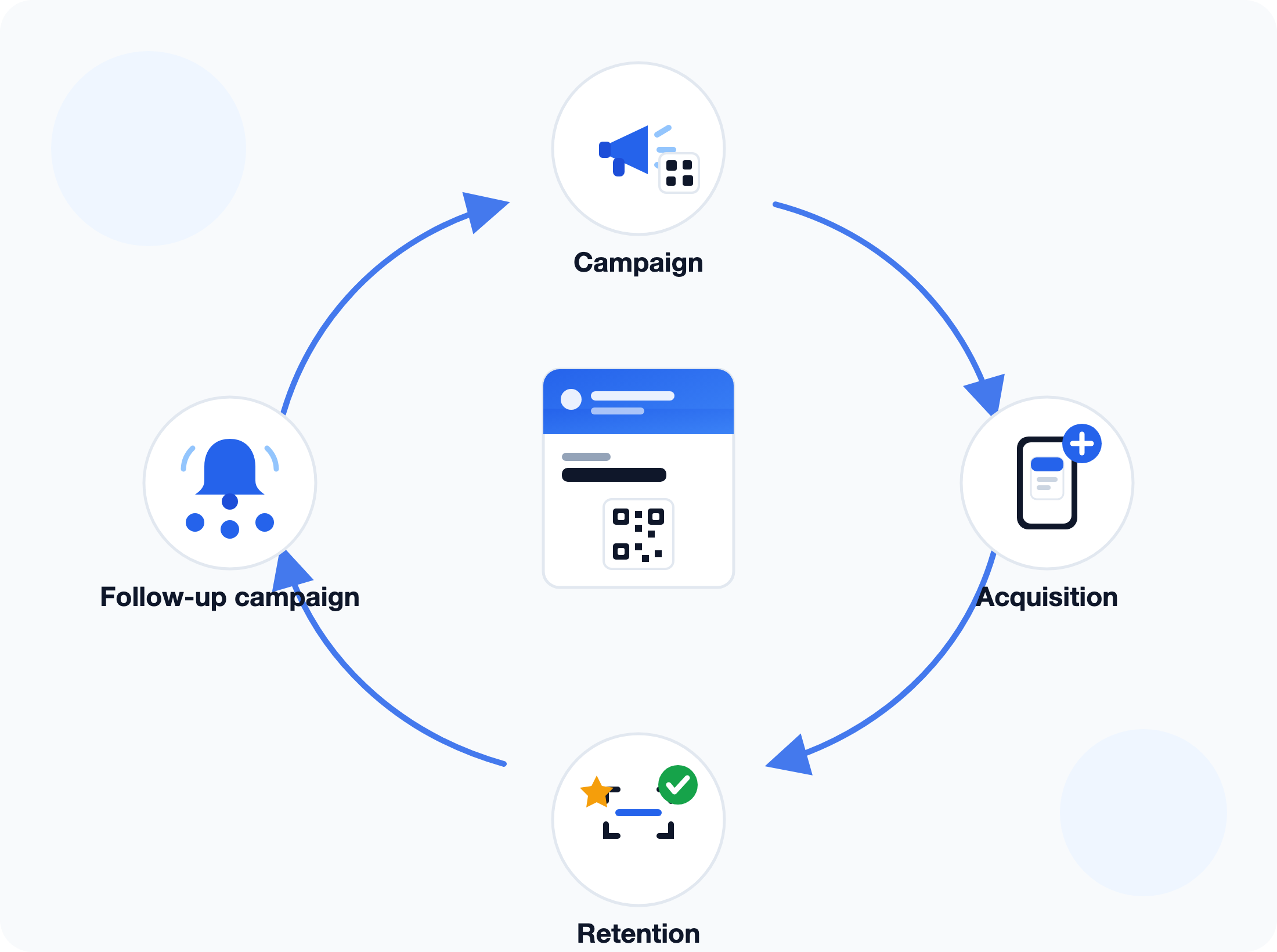
And when the campaign ends, the audience remains. Every saved pass is a customer the next campaign reaches with a push. Campaign one builds the audience; every campaign after pushes to it for pennies.
“Did anyone actually come in?”
It's the question every client eventually asks, and the one agencies fear most. The wallet answers it structurally. Campaign parameters — utm_source, utm_campaign — are stamped on each pass at the moment it's issued and preserved for the life of the pass. When that customer walks into the store three weeks after the ad click and their pass is scanned at the register, the scan arrives already attributed to the campaign that created it. Offline ROI stops being a modeling exercise and becomes a report you put in front of the client every month. Every event streams into Segment as a native source, so it lands in whatever analytics stack the client already runs — setup is pasting a write key.
The math fits inside a proposal
Credits are pay-as-you-go and only actions consume them — issuing a pass, pushing an update, a register scan. A pass sitting in a wallet costs nothing. A campaign that puts 5,000 passes into wallets, updates them all once mid-flight, and sees 2,000 scanned redemptions runs about $360 at the 10,000-credit rate. That's a number you can build into the quote in the proposal before you pitch it — and it scales linearly, so a 50,000-pass flight prices out the same way. When a client graduates to always-on loyalty — points, rewards, register scans, no customer app — a program with ~1,500 active members generating ~4,000 billable actions a month costs about $120 a month. A rounding error inside a retainer.
There is deliberately no partner tier and nothing to negotiate: the public rates are already the agency's cost basis. What you charge for the program is between you and your client, and the margin is yours.
Adapted account management
Most pass platforms assume a single merchant: one login per client, one credit card per client, and the platform bills the client directly — leaving the agency as a setup consultant. Pass Studio inverts that. The agency holds the account; each client is a brand workspace under it, with its own passes, members, and analytics. Credits pool in one wallet, bought centrally, allocated per client. Clients never need their own accounts and never see a Pass Studio invoice. Switch brands from the header — no logging out, no mixing anything up.
The full story, including the economics table and a one-page partner-terms summary you can forward to your finance people:
- Pass Studio for agencies — the agency model in full
- Partner terms (PDF) — economics, billing structures, due-diligence answers
- Teams & brand workspaces — how client workspaces work